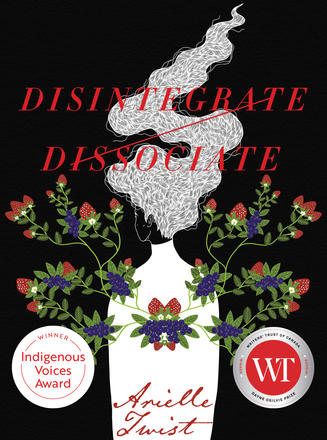
Disintegrate/dissociate
Winner, Dayne Ogilvie Prize for LGBTQ Emerging Writers (Writers’ Trust of Canada) and the Indigenous Voices Award; finalist, Publishing Triangle Award for Trans and Gender-Variant Literature
In her powerful debut collection of poetry, Arielle Twist unravels the complexities of human relationships after death and metamorphosis. In these spare yet powerful poems, she explores, with both rage and tenderness, the parameters of grief, trauma, displacement, and identity. Weaving together a past made murky by uncertainty and a present which exists in multitudes, Arielle Twist poetically navigates through what it means to be an Indigenous trans woman, discovering the possibilities of a hopeful future and a transcendent, beautiful path to regaining softness.
best Canadian poetry 2021
“A magnet, I think, for the many people who would like to know contemporary poetry.”—A.F. Moritz, Griffin Poetry Prize winner
“This is a book,” writes guest editor Souvankham Thammavongsa, “about what I saw and read and loved, and want you to see and read and love.” Selected from work published by Canadian poets in magazines and journals in 2020, Best Canadian Poetry 2021 gathers the poems Thammavongsa loved most over a year’s worth of reading, and draws together voices that “got in and out quickly, that said unusual things, that were clear, spare, and plain, that made [her] laugh out loud … the voices that barely ever survive to make it onto the page.” From new work by Canadian icons to thrilling emerging talents, this year’s anthology offers fifty poems for you to fall in love with as well.
an indigenous present
This landmark volume is a gathering of Native North American contemporary artists, musicians, filmmakers, choreographers, architects, writers, photographers, designers and more. Conceived by Jeffrey Gibson, a renowned artist of Mississippi Choctaw and Cherokee descent, An Indigenous Present presents an increasingly visible and expanding field of Indigenous creative practice.
It centers individual practices, while acknowledging shared histories, to create a visual experience that foregrounds diverse approaches to concept, form and medium as well as connection, influence, conversation and collaboration. An Indigenous Present foregrounds transculturalism over affiliation and contemporaneity over outmoded categories.
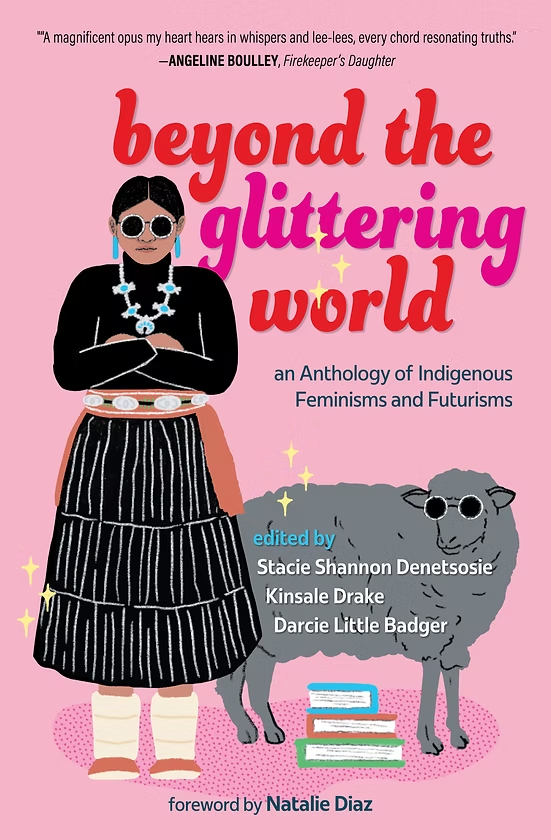
beyond the glittering world
Rooted in visions of Indigenous futurisms, Beyond the Glittering World proclaims and celebrates a rising generation of Indigenous women and genderqueer storytellers.
The collection brings together twenty-two emerging and established writers whose poems and stories expand the imagination an. From a museum heist 177 years in the making, to lyrical explorations of love and loss, to a tale where language itself becomes the force that saves the land, this boundary-breaking, genre-bending anthology illuminates the power of Indigenous voices.
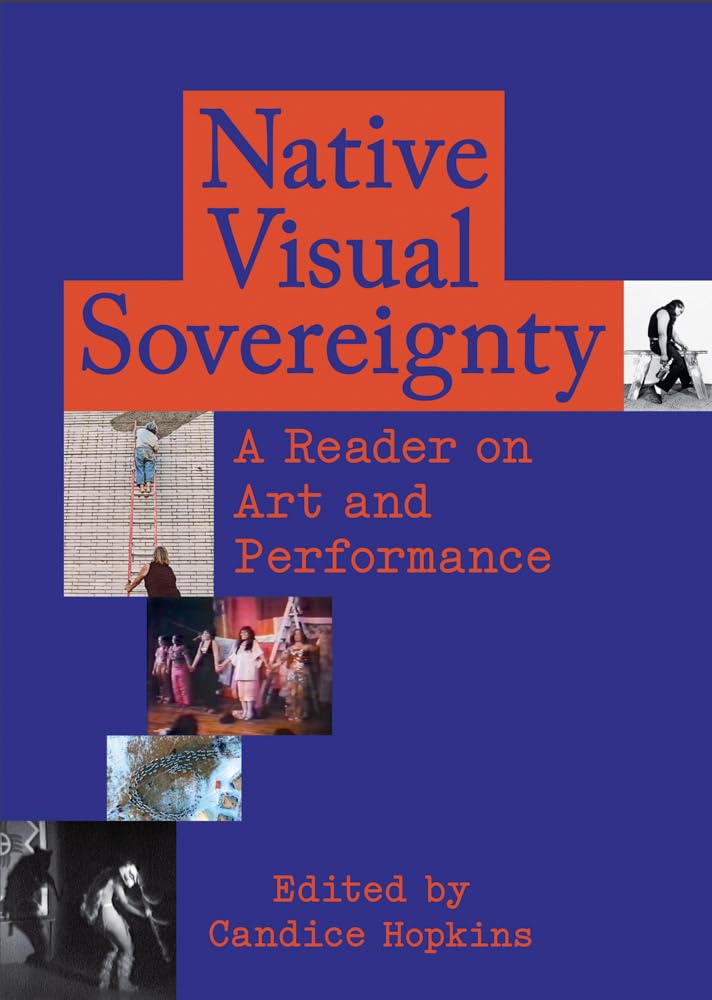
native visual sovereignty
Native Visual Sovereignty: A Reader on Art and Performance centers performance and theater as an origin point for the development of contemporary art by Native American, First Nations, Métis, Inuit, and Alaska Native artists, beginning with the role that Native artists have played in the self-determination era, sparked by the occupation of Alcatraz by the Indians of All Tribes in 1969. Native artists then and now are at the vanguard of performance art practices and discourse, using humor as a strategy for cultural critique and reflection, parsing the inherent relationships between objecthood and agency, and often complicating representations of the Native body through signaling the body’s absence and presence via clothing, blanketing, and adornment. Song, dance, and music are also posited as a basis for collectivity and resistance and a means to speak to a time when Native traditional ceremony and public gatherings were illegal in both the United States and Canada. Featuring excerpts from the 1969 document Indian Theatre: An Artistic Experiment in Progress, published by the Institute for American Indian Arts (IAIA) in Santa Fe, New Mexico, this generously illustrated reader will also include four long-form essays by leading Indigenous scholars, commissioned artist notes, oral-history interviews, and an edited selection of key texts from the fields of Native contemporary art, art history, and theory. The reader is an essential resource for curators, Native and non-Native artists, scholars, students, and teachers.
 Twist
Twist 